The Way of the Sword: Everything I built with AI in 2025
初段 (Shodan): India | March 1996
80 year old Grandmaster Chew Choo Soot handed me my black belt.
He was the founder of Budokan, a deceptively powerful style of Karate focused on defense. The twist: the defense hurts your opponent really bad. He’d flown in from Malaysia and watched me repeat katas and spar for 14 hours over two days. I was India’s third youngest Karate black belt at 11 years and 17 days old.
What did I do to deserve it?
Countless hours of kata practice. Sparring with bigger guys. Bruised ribs every week, not from punches but from kicks. Bleeding knuckles. My mom’s support.
But there’s a single thing that actually led to my black belt. The bleeding knuckles. Joy.
Every class we’d be punished, individually or as a group, for our crimes. It was always the same: knuckle push-ups, then hold yourself still until the Sensei lets you free.
Other boys would give up. Wail in pain. Some would cry. All of them would get more punishment.
Not me.
I would outlast the class. Every single time. My knuckles bled and shoulders screamed, but I loved it. It was my favorite feeling in the world.
It was joy. And the only reason I went back.
Shodan: The Beginning of the Way
稽古 (Keiko): The Bellagio, Las Vegas | January 2025
Soft, gold-toned lighting illuminated golden jacquard motifs throughout the room. Outside, the setting sun did the same to the hotels and casinos decorating the Nevada desert. Everything was bathed in gold.
I was in town for a convention unrelated to technology. Tonight was the gala. I’d gotten ready early for two reasons: my outfit was monochrome, and I wanted to get there early to shoot some pictures on the Leica. Vegas is indoor photography heaven.
For the last two days, I was alone, pen on paper (most of what I do starts with pen on paper, including this article), assembling bets, drawing and redrawing journeys, running mental model after mental model. The past six months had been wild: getting back into tech with a wild private equity angle that led to a Manhattan townhome acquisition + renovation and a limo company acquisition, both of which kept me on the streets, not in an office.
Two notebooks and a few pages later, I was finally able to gather and align my neurodivergent neuro-minions. As they waited in whimsical excitement, I took my time. My message had to be simple. When I said it, they went nuts. Like Felonious Gru Sr.’s crew. Hyper nuts.
“We will master three things: AI, Content, and Distribution.”
From Zero to One. For the next five days, we gobbled up everything from whitepapers and how-to guides to YouTube videos shilling magic millions and supermodels on yachts overnight. 18-20 hours a day. It didn’t feel like work. It felt like a video game. It still does. We started separating signal from noise, and everything we learned unlocked something else.
Keiko: Diligent, reflective practice.
練習の道 (Renshū no Michi): Lower East Side, NYC | January 2025
I had my fattest and warmest down jacket on as I stood on frozen ice on the roof, neuro-minions lined up on my shoulder. The wind raged into my face. Exactly what I wanted. I wanted to flinch, then get beyond it.
We’d shot half a million photographs and a few thousand videos. It was time to focus on understanding the biggest, baddest opportunity before us: distribution.
From the next morning, the furthest corner in the vast building lobby was our spot. Quiet, spacious, pleasant scent. The plan was simple: learn AI by building from 5:30-7:30 AM every day, learn distribution by distributing and selling two hours a day.
Since this was going to be every single day, our north star had to be fun.
And has it been that or what.
Renshū no Michi: The path of practice. Dedicated, varied study for mastery.
弓道 (Kyūdō): NYC | March 2025
We were able to separate signal from noise pretty early. All we needed to do was weaponize our specific knowledge and fire. Everything else would follow.
What was our specific knowledge? Abilities gained from 25 years of work and pain to get to first principles: music, curating music, product, e-commerce, hospitality, digital ops, business ops, web development, SEO, SEM, photography, architectural design, food and beverage, online education, social media, human-computer interaction, algorithms and software engineering.
There had to be a box. The box was: low or no cost, clear learning goals, clear outcomes within a set time frame. Success or failure.
After considering our abilities and constraints, our genius idea was this: We love food. We’re obsessed with good food, cooking, health. We could shoot cinematic video (3/10 at the time, went to about 8/10 after this endeavor), edit it in an engaging way, and post it, trying to find the right audience.
Then, value. There had to be value. Couldn’t be comedy clips. Entertainment is necessary but it’s the cheapest “value” in the value chain.
Platform picking came next. The world’s largest social media platform or the world’s fastest growing? YouTube complexity or TikTok Darwinism?
YouTube has a high barrier to entry plus complexities: reels style, shorts, long form, short form, ads. TikTok was simpler, and the only platform that stayed true to its purpose: “If you make good content, we will show it to everyone on the platform that wants that type of content.”
“We want everyone to cook Indian Food” was our hypothesized motto. Actually, it’s a variation of the Velvet House motto: “We want everyone to love Indian Food.”
ChutneyBro was born.
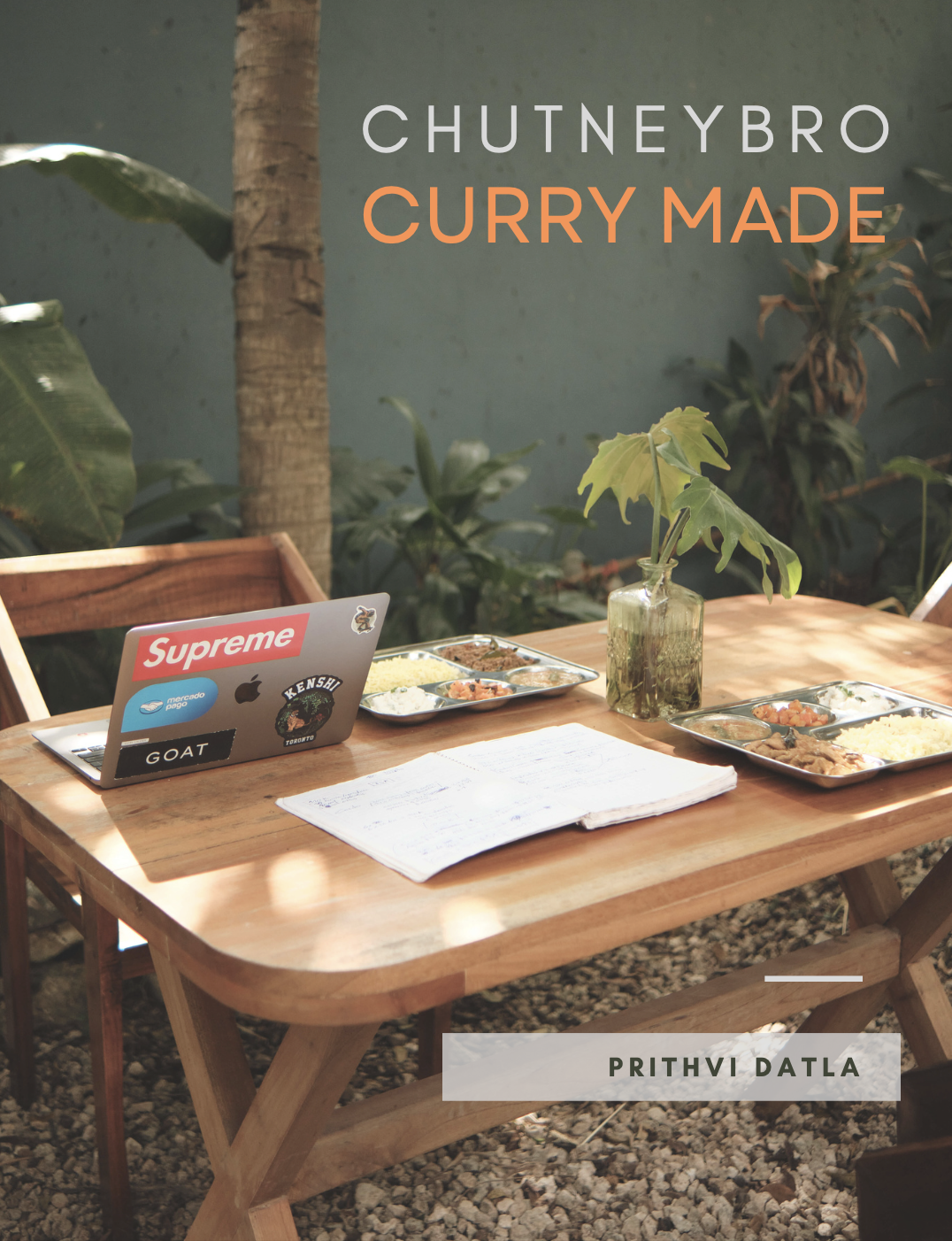
The experiment was simple: Create a TikTok account that shows how EASY it is to cook gastronomical Indian food. Get them to a website. Offer a free mini ebook. Get their emails. Our 60-day goals were modest: 100K views on a single video, 3,000 emails gathered.
We used CapCut to edit. I spoke absolute rubbish to ElevenLabs for 90 minutes to generate a voice clone. Built a custom GPT to clean up and develop scripts, another for caption ideas, frame by frame capture. This was also one of the last times we’d work with OpenAI GPTs. Anthropic and Grok came out with their own versions, and frankly, ChatGPT sucked.
After about 20 days of cooking, shooting, and editing, we posted seven videos. Each clearly better than the one before. Studied, understood, and gauged in detail.

On March 9th, we hit the jackpot.
After hitting 12-15,000 views per video (highly targeted), this one blew up to 400,000 views. Thousands of comments, saves, and reshares. 1,700 downloads of the mini ebook.
It felt like altcoin season. I had to touch grass.

What followed was a quick assessment: How do we monetize this? Are there asymmetric returns? What is the cost? What is the process?
Two choices stood out: cookbooks on Amazon, or a spice kit that solves the “Indian cooking” problem. The biggest reason why non-Indians don’t cook Indian at home is the ingredients. Nobody wants to buy a year’s supply of Thai curry powder when they only make it once a month.
After costing (time, money, material) and ROI analysis, which came from ordering Uline packaging material, putting together a spice kit, and shipping it to friends, I realized there was no meat in either idea. The cookbook required too much promotion time. The spice kit was too much of a pain to execute at scale: cross-border trade, human capital, material complexity.
Rejected. What next?
Enterprise.
Kyūdō: the way of the bow. Aim. Release. Trust the arrow.
改善 (Kaizen): Atlanta | April 2025
Shortly after April Fool’s, I left New York City in a truck. First destination: Atlanta. The plan was to spend time at my recently wed sister’s home, take it easy for a week or two, then head to Texas. I wasn’t sure how I was going to take it “easy” but that was the intention.
Now both my sister and brother-in-law work from home. She’s a pharmacologist who works on regulatory affairs and drug approvals, with three huge screens at her desk. My brother-in-law is a cybersecurity guy with his home office setup like a gaming terminal met a trading terminal: seven humungous screens.
Not my vibe.
Luckily, unknown to me, a childhood friend had moved to Atlanta from a decade in the Bay Area. He was an entrepreneur and academic who built a unique business in a very unusual way. More luck? The guy calls the day I arrive, oblivious to the fact that I’m there.
We chat for five minutes. “Why don’t you come work out of my office? You have a room with a screen in it.”
“Sounds like a plan,” I said.
The next morning, I showed up at his office at 7. “I don’t want the room,” I said, as he wondered what I wanted instead. “I’ll take the conference room.”
By this time, I was neck deep in consumer AI but still wetting my toes with enterprise. I was also getting restless at the stuff I was building as part of my learning: stupid chatbots, email agents that don’t work.
That afternoon I started making calls to friends who owned small businesses.
Goldmine.
None of them were using AI. Worse, the ones who were? Using it wrong in many ways, for many reasons. Even worse, those who thought they understood it were spitting out utter nonsense because that’s what they were exposed to.
By the next evening, I had 13 use cases begging for a solution: property management, business finance, mortgage brokerages, temp staffing agencies, and more.
We weren’t done.
My friend and I were the last guys at the office. As he walked past at end of day, “Let’s get drinks,” he said. He’d abstained for Easter the past 40 days and had a glint in his eyes that shone through their pensiveness.
On the way to a nonchalant dive bar in the area: “What’s bothering you?” I asked.
“I have a big meeting next week and have no idea how to make the best of it.”
“A big meeting?”
“Yes. I got time with the big boss at the State Department of Education. They’re looking for a technical training partner. I’d like to show him some of our capabilities in a way that he sees value, but my mind is a mess.”
“Why is it a mess?”
First sips of draught later: “They want a certain set of employees trained on Machine Learning, and I’m hitting a wall trying to tailor it to them.”
“Who are these employees?” “A lot of engineers and data practitioners.” “How do they want them trained? Live? Self-serve?”
“They’re looking for a partner that can produce self-serve content, but before that, they want workshops delivered in person. Self-serve content at scale takes time, and they’re in a rush.”
I took a sip as he continued: “I have no idea what their technology stacks are. The biggest problem is context. I cannot show curricula, learning paths, or potential benefits without knowing who the audience is.”
“Why don’t you ask them?”
“Because of how I got this meeting in the first place. See, the big guy’s daughter learned Machine Learning from me while at school, so she helped set it up.”
“Ah, I see.”
“Why don’t we meet at 7 tomorrow and work on this together? I think I can help. For now, let’s work on our mugs, and then a few more.”
After catching up on life and a rare mutton biryani from one of the local restaurants, we called it a night.
Sleep though was furthest from my mind.
I sat down in my room, notebook open, scribbling away. I was inverting: what won’t work? What won’t help? All nonsense tossed aside, I made a list of what was needed as input and what was needed as output.
Then I built mini agents and some orchestration where needed (total cost was next to negligible, used public models): highly accurate tech recon, people recon, agency recon. Market analysis agent. Reddit data analyst agent. Curriculum builder (based on audience: engineers vs data analysts, years of experience, platforms used). Sales motion advisor. Collateral builder.
At 3 AM, I passed out. Mind raging on dopamine, body dead from 21 hours of waking and working. Plus the beer and biryani.

About two and a half minutes into the meeting the next morning, he went nuts.
“Send me this stuff and show me how you did it!” he yelled.
An hour later, he left the conference room as if Osho had touched him. Seriously, you could see bliss in his eyes. He had enough to fill in details, call on his academic collaborators where necessary (now that he had specifics on technology and people involved), and enough info to articulate value at the meeting.
Selling and negotiating need a specific brain architecture, not generic slop spit out by AI.
And just like that, we’d built a business solution with tangible value.
Kaizen: continuous, small, good changes.
残心 (Zanshin): Dallas | May through December 2025
We trucked into Dallas at 3 AM, caught a whiff of sleep, and by 8 AM were off to the streets. No ghost of coming back.
Dallas, among many things, is a huge services hub. Most small businesses are services-based. Armed with the use cases we’d listed, I set up 2-3 meetings a day with everyone I knew who ran a small business and who was not an idiot.
There is no room for idiocy when handling a katana. The crew was at war. Will always be.
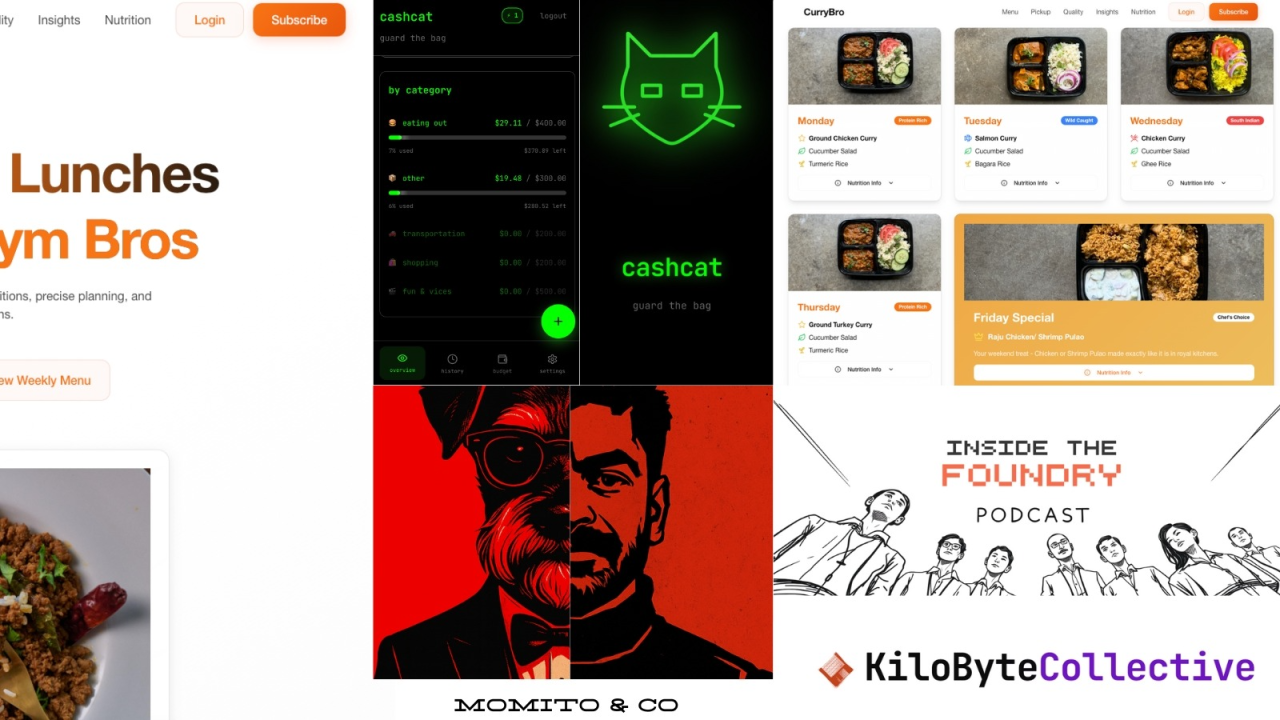
Fast forward to December. In addition to all the AI solutions I built at work, we’d built solutions for a bunch of these friends and some of our own whims. Each of these is a wonderful story in itself:
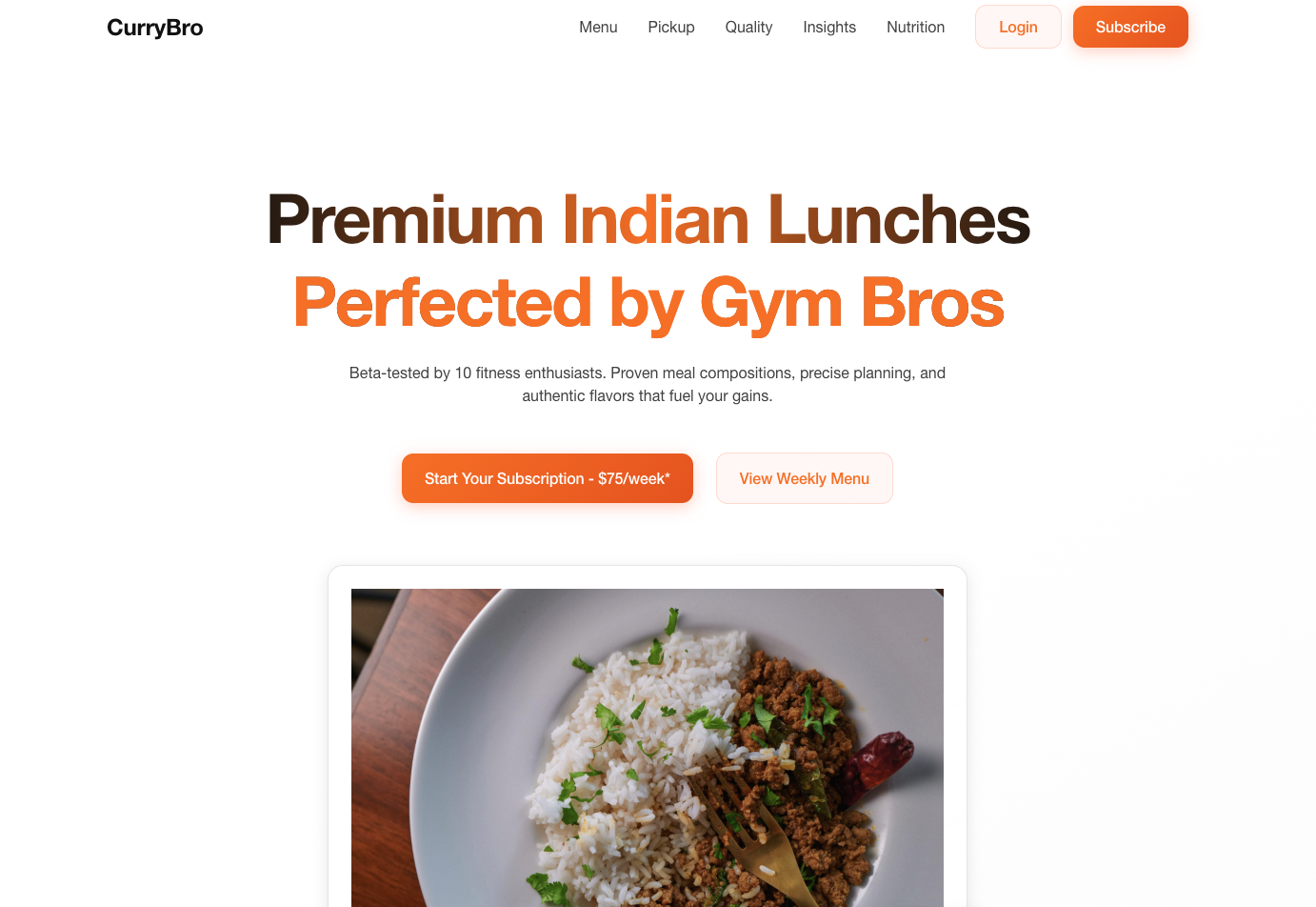
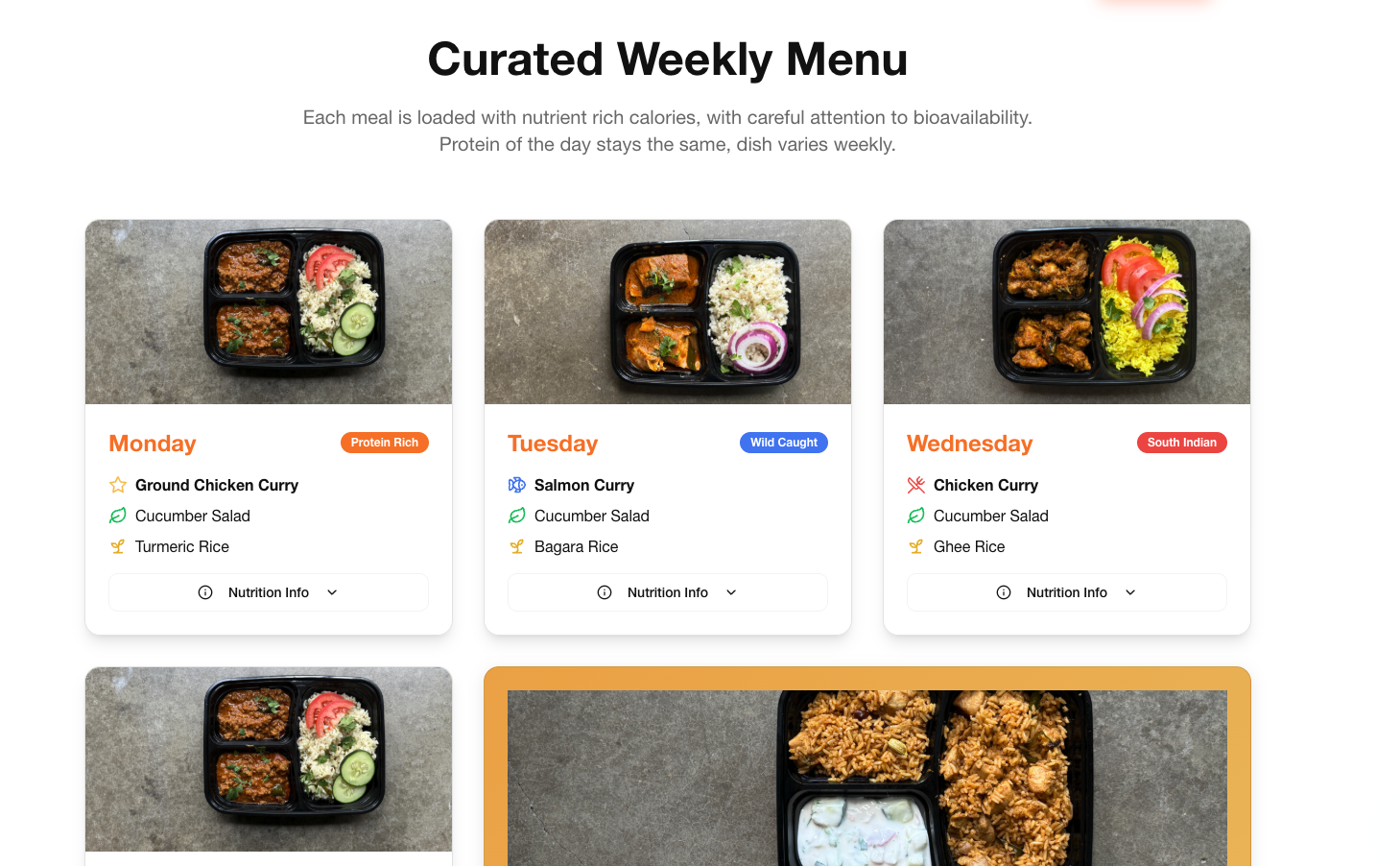
CurryBro, Lunch Subscription for Gym Bros: Web application, AI nutrition tracker and assistant, subscription service, Stripe, CRM, GTM, collateral.
Services Company, Field Ops: Time reporting → Invoice generation → Payroll processing → AR → FCF. Reduced ~67 man-hours per month for every 100 operatives.
Tech Staffing, Bench Sales: Near real-time job scraping → Skill matching → Submission. Submissions up 3X in one week.
Online Education: Website, curriculum design, collateral, team building, AI enablement, GTM, CRM, RevOps.
Small Business Broker, Deal Analyzer: Small business M&A. 4-day reduction in time to output. Compliance built in for all 50 states.
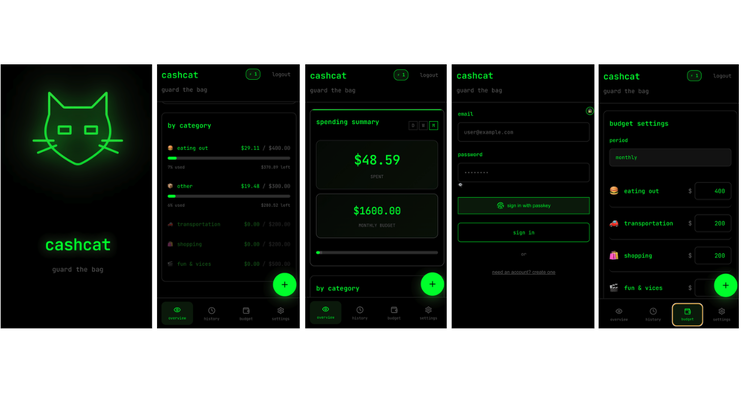
CashCat, iOS App to Build Wealth Manually: Web application, iOS app, Research and Recon agents, GTM, collateral. Currently in beta on iOS TestFlight.
Indie Film Studio: Scripting, music, screenplay, images, video, social distribution on TikTok.
Music Production: Prompt engineering, AI mastering. Time to master down 80%+.
.png)
Summer Internship for College Kids: Curriculum design, content gen.
Insane amount of rapid learning and mad context switching throughout. Not easy, now that I think about it, but at the time, ease or the lack of it was the least important of my worries. I had to keep them neuro-minions happy.
Zanshin: the remaining mind. Awareness that persists after action.
無心 (Mushin): The Tribute, Dallas | December 2025
When left with the remaining mind, I hit the brakes.
For over an hour and a half, I putted 100 balls each from 5, 10, and 15 feet. Putting is the only golf skill I practice standalone. To me, stroking a good putt is orgasmic. I’d say I struck a couple hundred of those putts absolutely pure.
Why is this important? Because that state is a state of no-mind. Where emotion has no room.
In this state, I saw the past year for what it was. What we did. What were the consequences. Then I looked at the grand playground in front of us and all the dirt inside it.
The landscape is a mess with third-rate players.
Think about it: do the McKinseys or Accentures have AI talent that brings business solutioning depth? If someone says they do, then we’re living in another universe.

I’ve met thousands of men and women aged 45-60 through work this year. Beyond a handful, no one actually cares about AI beyond talking about it. A few more understand what it can do in their area of expertise. I don’t blame them. They’ve practiced their careers for decades. They’re great at what they do. They’ve responsibilities. They’re tired. No more learning. They’d like to chill.
We don’t. We can’t.
Not when the biggest enabler known to man is in its infancy. Not when there is newness waiting to unlock dreams.
Our group has grown too. From me to a few super-minions: incredibly passionate and young AI practitioners, each with varied skills and strengths. One is a content and data rockstar. The other is an engineering and sales dev rockstar. Another lives and breathes data. The best part - they all have backgrounds in small business.
Their first test was to send me the day’s news in their own words by 6 AM, four days in a row. If they miss a day, they get a second chance at four days in a row. If they miss that, they’re out.
They’d been working with us for a couple of months now, learning, experimenting, building. The little neuro-minions instructed me to give them a shot, eyes rolling with sass. Thats when I realized - they were possessive little shits.
Mushin: no-mind. Fluid. Effortless.
道場 (Dōjō): Kilobyte Collective
We’ve spent 15 months in the trenches: building, failing, iterating, delivering. We’ve seen what AI can do when applied with business acumen, not just technical chops.
We’ve also seen the biggest challenge in AI adoption: literacy.
What we help you do:
Enable your workforce and business with AI, from literacy workshops to fully built solutions that help you:
- Unlock new business models, markets, and revenue
- Build better and longer customer relationships
- Talk to your data like you talk to a human: get answers in seconds, not days or weeks
- Reclaim 50-60% more man-hours for the work that actually needs humans
- Build and rapidly expand sales and marketing channels
Who we want to serve:
Small businesses ready to grow from $5M-$25M ARR to $100M ARR. Fast.
The Ask
If you’re a business owner tired of AI hype and hungry for AI clarity, let’s talk.
If you know someone who fits that description, share this post.
Let’s learn. Let’s build.
The dojo is open.
Dōjō: The Place of the Way